
Swap a paneled door for a full-view one and the garage becomes a bright room, and its aluminum frame will not swell, warp or need repainting the way an old wood door does after a humid summer. OnPoint Pro Doors measures, orders and installs them on both sides of the state line, and the estimate is free.
Tell us what's happening. Free estimate, nothing owed.
A full-view door is an aluminum grid of rails and stiles, with glass or clear polycarbonate filling each opening. They run on ordinary tracks and torsion springs and work with a standard opener, but they look nothing like the paneled doors on most of the street.
Here, the material is part of the appeal. Wood doors drink in the summer humidity, tighten in their openings and want fresh paint on a regular schedule. Aluminum does none of that. The frame keeps its shape through a sticky August and an ice-storm January, and the finish is baked on rather than brushed on.
Full-view doors look most at home on modern houses and recent remodels, and on garages that have become something else: a home gym, a woodshop, a studio, a rec room for the teenagers. Detached backyard shops get them for the daylight at the workbench.
On a classic bungalow, a carriage-style door with a row of square windows usually suits the street better, and we will say so. On a split-level or a ranch with a clean front, a full-view door in black or bronze can change the whole look of the house. Samples come to you, so the decision is made in daylight next to your actual brick or siding.
On streets governed by a homeowners association, the board's rules on door style and color come before the order. The technician can put together the finish, glazing and a drawing of the door so the request goes in complete the first time.
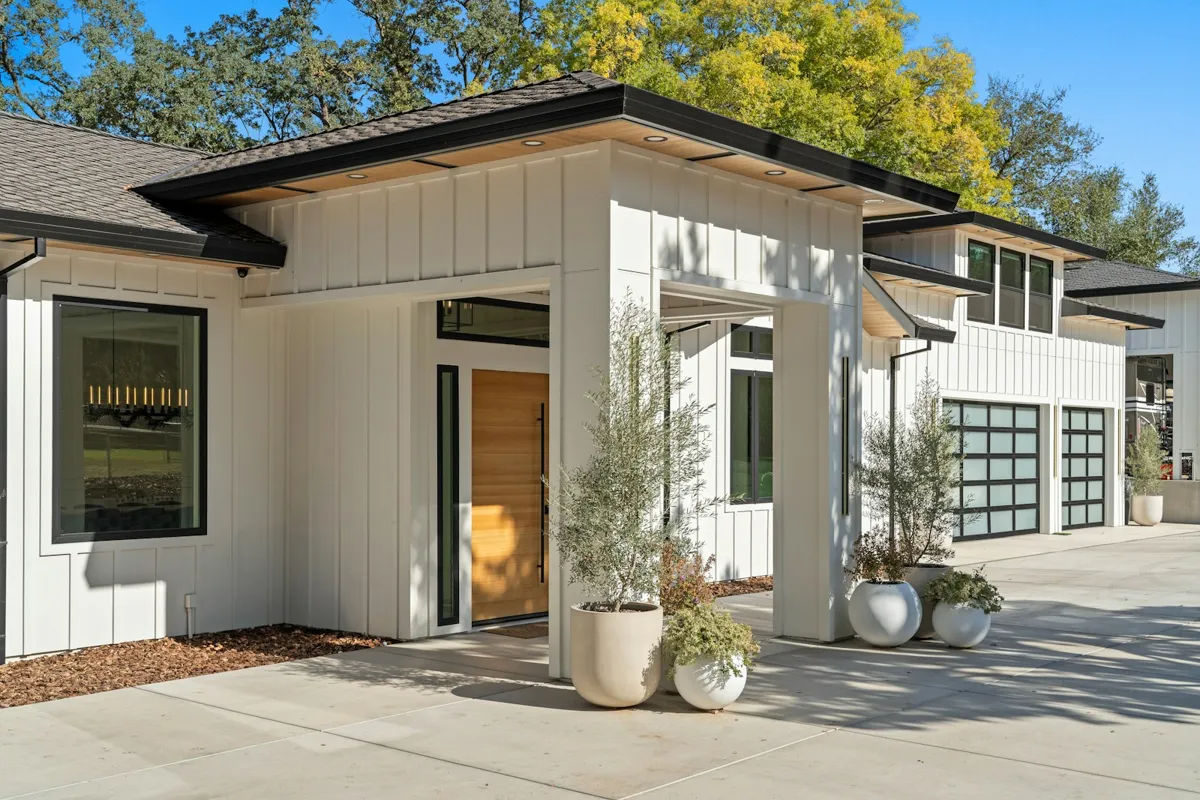
The frame comes in clear anodized aluminum or a painted finish such as black, bronze or white. The panels are where you decide how the door behaves.
Clear tempered glass gives the full showroom effect. Frosted or obscure glass keeps the light and hides the clutter. Tinted panels cut summer glare. Polycarbonate looks much the same and handles impacts far better, though its surface scuffs more easily than glass. Insulated double-pane units suit a garage with rooms over or beside it.
Any panel can be replaced on its own later, so a single broken or scratched one never means a new door.
Spring storms bring hail and hard wind, and a glass door should be chosen with both in mind. Tempered glass is several times stronger than ordinary glass and crumbles into small rounded bits if it fails, but a big enough hailstone can still crack it. Polycarbonate in the lower rows, where hail and stray baseballs land, is a common compromise.
Wind is a matter of structure. Wide doors are built with the bracing their maker specifies, with the track anchored in sound wood so a gust can't rack it. That part of the job is the same on a glass door as on steel.
Glass lets more heat through than an insulated steel door, in both directions. On a garage used only for cars that hardly matters. On a split-level with a bedroom over the garage it does, and insulated double-pane glass with good seals is the way to keep that room comfortable through a hot July and a frozen February.
Single panes can also fog when the temperature inside and outside the garage is far apart, which insulated glass largely avoids. A bottom seal that meets the slab evenly plus fresh weatherstripping up the jambs and across the header keep out the drafts, the dust and the slush that can freeze a door to the slab.
Some of the best homes for a full-view door are the ones where the garage stopped being a garage. A home gym gets daylight and a view of the yard. A detached backyard shop gets light at the bench without cutting skylights into the roof. A rec room can roll its front wall up on a warm evening and close it again when the mosquitoes arrive.
Those rooms are often used more than the house's main garage, so the door sees more openings than usual. A balanced door with good rollers and a quiet opener keeps it pleasant to use, and an insulated version is worth considering if the space is heated or cooled.
If the building has an odd-sized opening, that is fine: these doors are made to order, and the frame is checked for rot before anything is measured for the final time.
Four steps, with nothing ordered on a guess.
A full frame of glass, especially insulated glass, often outweighs the steel door it replaces, and a bungalow's old wood door can be heavier still. Either way, the springs are chosen for the new door once it is hung, never reused, so it feels light by hand and stays put halfway open.
The opener gets checked against the new weight too. A unit that was always borderline will strain on the first cold morning, and if a stronger one is needed, you hear it before you sign, not afterward.
Tempered glass is strong, but a big stone can still put a crack in a pane. Polycarbonate resists impact much better, and any damaged panel is replaced individually.
No. Aluminum does not swell with humidity the way wood does, and the factory finish protects the frame for years.
Only with clear glass. Frosted, obscure and tinted panels let the light in and keep the inside private.
Single glass loses more heat than insulated steel. Insulated double-pane panels and good seals keep the room above much more comfortable.
Sometimes, but a carriage-style door often fits a bungalow better. You see both on samples before deciding.
Yes. Full-view doors are made to the opening, so a backyard shop or studio with a non-standard size can still get one.
The measuring visit sizes up the opener against the new door's heft, and you hear about a bigger opener only if this one truly can't cope.
Yes, all of it: the measuring trip, the samples and the written free estimate.
We need three things: a name, a number, and what the door is doing. Everything before you agree to it asks nothing of you, across the whole of Jackson County.
Quicker to talk? Call (816) 315-5261.
Tell us what's happening. Free estimate, nothing owed.