
Service bays, small warehouses, storefronts, storage buildings and shops on both sides of the state line run on big doors that cannot be out of action for long. OnPoint Pro Doors repairs sectional overhead doors, rolling steel curtains, roll-up doors and the motors that run them, and every visit starts with a free estimate.
Tell us what's happening. Free estimate, nothing owed.
There are three broad kinds of commercial door. Sectional overhead doors, steel panels hinged together and lifted on tracks, cover service bays, shops and loading areas. Rolling steel doors coil into a barrel over the opening and protect storefronts and warehouses without taking any ceiling space. Light roll-up doors close storage units and small sheds.
Each kind breaks in its own ways and uses its own parts. If you can tell us which kind you have, roughly how wide it is and what it did when it stopped, the truck leaves with the right springs, cables and hardware on board, and a photo of the maker's label is even better.
Property managers and owners with more than one building can list every door that is giving trouble. They are looked at on the same trip, written up on one estimate and fixed in the order you choose, so the worst door gets attention first.
The weather here works on commercial doors in two seasons. Through the muggy months, damp air settles on springs and cables, rust pits them where they rub, and steel rollers start to drag. Nothing breaks yet, but every cycle puts more strain on parts that are quietly weakening.
Then winter arrives. Freezing rain glues bottom seals to the concrete, and an operator pushed against a frozen door can strip its drive or pull a cable off its drum. Springs already thinned by rust tend to choose the coldest morning to let go.
An early-fall look at a busy door catches most of that while it is still a small repair: rust on the springs, a cable starting to fray, a seal that has gone hard.
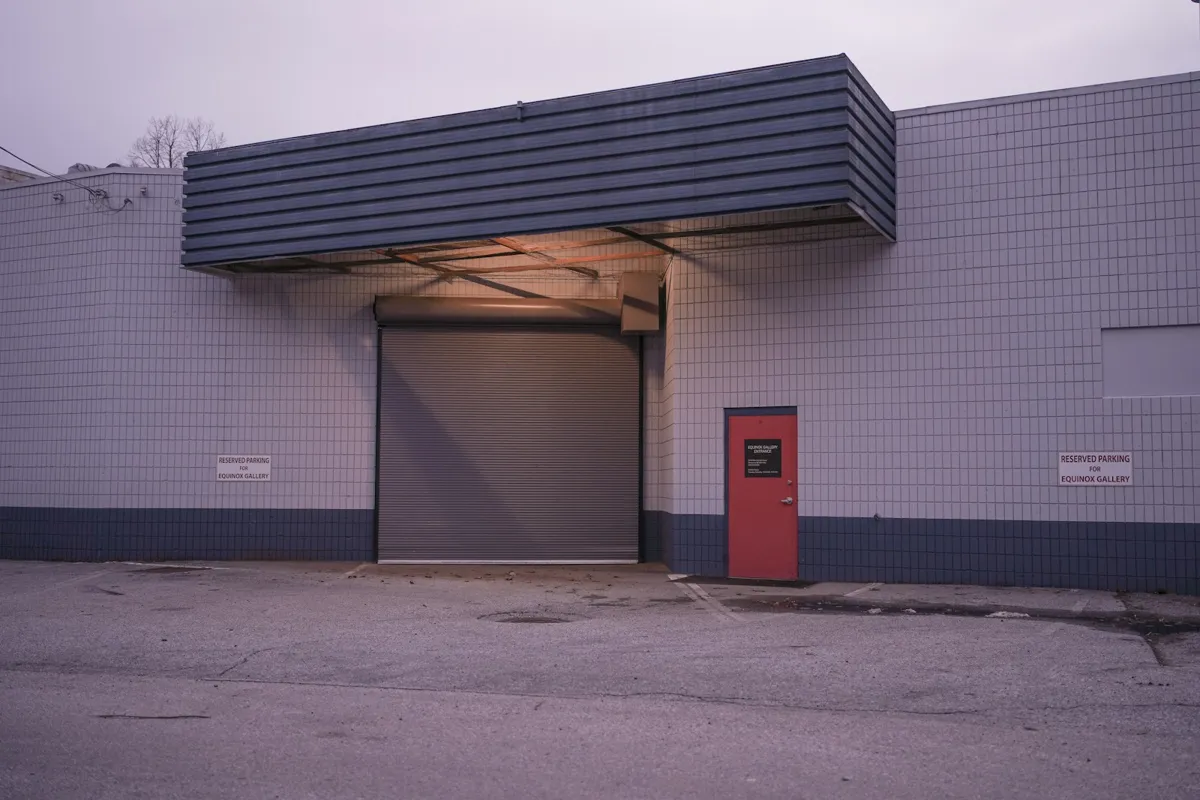
A rolling steel door hides its springs inside the drum over the doorway, and when they tire the curtain feels heavy on the chain or the operator labors and stops short. A curtain that rides crooked or jams at the same height usually has a guide knocked out of true or a slat that has crept sideways.
Bottom bars take the hits from carts, pallet jacks and bumpers, and a twisted one keeps the door from sealing or locking. Slats, guides and bottom bars can be replaced individually, which keeps the rest of the curtain in service.
Storefront grilles and perforated curtains follow the same rules, with the same parts in a lighter build.
Springs are rated in cycles, and a door at a busy shop can burn through a standard spring's rating far faster than anyone expects. When the same door keeps breaking springs, the answer is usually high-cycle springs, made of thicker wire that tolerates far more openings between changes.
Cables share the springs' fate. Rust-pitted strands near the bottom brackets fray, and a frayed cable on a heavy door is a real hazard. Replacing either one starts with releasing the spring tension safely, a job for someone with the right bars and training, never for whoever happens to be closest to the door.
Once the new parts are on, the door is balanced so it holds its position by hand, which takes the strain off the operator and everything else that moves.
Spring and summer storms send surges down the line, and commercial operators take the hit like any other electronics. Afterwards an operator may go dark, ignore its three-button station or run past where it should stop because its limit settings were knocked out. The board, the limit switches and the push-button station each get tested before anyone calls the operator a loss.
Safety edges along the bottom of the door and the photo eyes across the doorway are tried on every call; a heavy door that won't reverse has no place in a working bay.
A door your crew still hauls up by chain can be converted to motor operation. Balance comes first; then a motor rated for that door goes up, with push buttons placed where the crew works.
Plenty of commercial repairs start with an impact: a box truck backed in a little too far, a forklift mast that clipped the bottom section, a gust that caught a door left half open. The damage shows up as a creased panel, a track knocked out of plumb or rollers popped out of their channel.
A damaged section can be swapped without replacing the whole door, and track is straightened or replaced so the rollers run true. If the building can't be locked after the hit, mention it on the call; securing the opening comes before anything cosmetic, and the finishing work follows once any parts are in.
Bollards or a guard at the edge of the opening are worth talking about if the same door keeps getting hit. That work belongs to whoever looks after the building, but the technician can point out where the strikes are landing and what they are doing to the track.
Booked for the hours your bay can sit idle.
Sectional overhead doors, rolling steel doors and grilles, storage-unit roll-ups, and every operator and control on them.
Yes. The same trucks handle shops, warehouses and storefronts on both sides of the state line.
On a busy door, standard springs reach their rated cycles quickly. High-cycle springs, rated for many more openings, usually end the run of breakages.
Not necessarily. A surge often damages a board, a limit switch or the controls, and those parts get tested and swapped first.
Usually not. Damaged sections are replaced one by one, and the track is trued or renewed.
Yes. Rolling grilles and perforated curtains on storefronts are repaired the same way as solid rolling doors, slat by slat where possible.
Most can. Once the door is balanced, a motor rated for its size goes in, and the buttons go wherever your team needs them.
It is. Once the door and its motor have been looked over, you get the free estimate in writing, before any repair.
We need three things: a name, a number, and what the door is doing. Everything before you agree to it asks nothing of you, across the whole of Jackson County.
Quicker to talk? Call (816) 315-5261.
Tell us what's happening. Free estimate, nothing owed.