
The 7 Garage Door Symptoms That Mean It's a Kansas City Freeze-Thaw Problem (Not Just "Stuck")
By the OnPoint Pro Doors KC team · Updated May 11, 2026 · 8-minute read
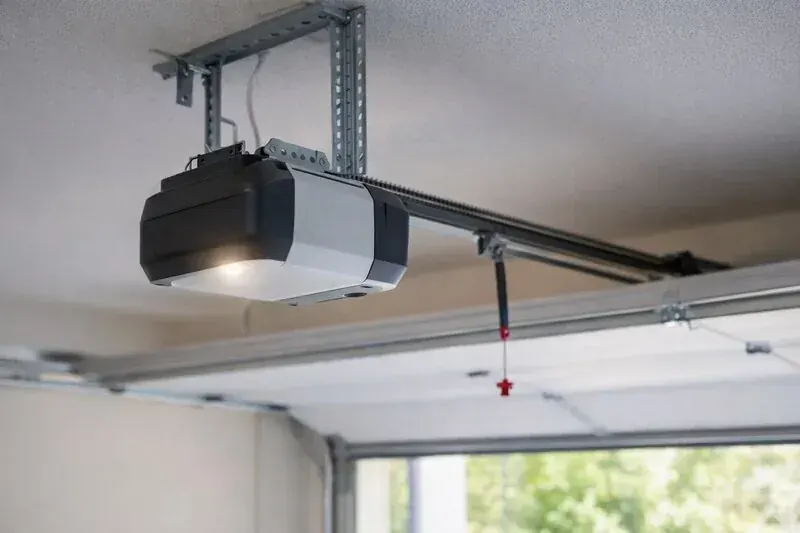
Kansas City's freeze-thaw cycle is the harshest in the lower Midwest. The metro routinely swings 40 degrees in 24 hours during December and January — afternoon highs in the upper 40s followed by overnight lows in the teens. Every one of those swing-cycles puts cyclic thermal-stress on your garage door springs, opener gears, rubber seals, and roller bearings. After a few hundred cycles, very specific failure patterns emerge. Diagnose the right one and you avoid both unnecessary service calls AND ruining the opener by forcing a door that needs to be stopped.
QUICK ANSWER
KC freeze-thaw cycle damage shows up as 7 specific symptoms: (1) door rises 6-12 inches then reverses, (2) loud bang from the garage at first morning use, (3) opener motor runs but chain doesn't move at first cycle of the day, (4) bottom seal frozen to concrete (silicone-spray fix), (5) door operates but makes a popping sound between mid-rise and full-open, (6) opener won't engage AT ALL on the coldest mornings, (7) door drifts back open or back down after 1 to 2 inches. Each one points to a specific component. Symptoms 1, 2, and 7 mean STOP and call us; the rest can usually wait a day.
Cold-weather garage door symptom you can't pin down?
OnPoint dispatches same-day across all of Kansas City Metro — Overland Park, Lee's Summit, Olathe, Shawnee, Liberty, Independence, Lenexa, Leawood, Prairie Village, Raytown, Blue Springs, and KCMO. Free written estimate before any work.
Why KC Winter Garage Doors Fail Differently Than Summer Doors
A garage door is a system of moving steel parts, all of which contract slightly in cold, plus rubber and plastic components that lose flexibility below 32°F, plus a motorized opener with electronics that can fail in either cold or condensation. The KC freeze-thaw cycle stresses all of these simultaneously, and the symptoms point to which component is at end of its useful life.
Most KC homeowners try to operate the door normally through January and February without realizing that a winter symptom is a system-level signal. Pushing through a cold-weather symptom is how a free written estimate sensor realignment becomes a free written estimate opener replacement. Diagnosing the symptom correctly is the difference.
Symptom 1: Door Rises 6 to 12 Inches Then Reverses (KC-Winter Variant)
In warm weather, this symptom usually means photo-eye sensor obstruction. In KC winter, the more common cause is spring tension that has decayed past the opener force-limit threshold.
How to tell which: Hold the door at the 6-inch height manually. If you can lift it from there easily, it's a force-limit / spring problem. If you have to push hard to lift, the spring is fine and the issue is sensor alignment or a cold-shrunk track.
⚠️ SAFETY WARNING
Do not adjust the opener force-limit yourself to compensate. Setting force-limit higher silences the safety circuit and exposes you to a door that won't reverse on an actual obstruction (a child, a pet, a car). The correct fix is spring service or sensor realignment, not raising force-limit.
Symptom 2: Loud Bang at First Use of the Day
This is the classic KC-winter spring break. Almost every cold-weather spring failure happens on the first lift of the morning, between 6 AM and 9 AM, on a day when the overnight low was below 15°F.
If you heard the bang and now the door either won't move or only lifts 4 to 8 inches before stopping or coming back down, the torsion spring is snapped. Do not run the opener again — it strains against the now-imbalanced door and burns out the motor.
PRO TIP
If you live in Overland Park, Olathe, or any of the older first-ring KC suburbs and your springs are 7+ years old, schedule a fall tune-up before December. Catching a near-end-of-life spring before it snaps saves you the cost of opener repair (because forcing a broken-spring door also damages the opener).
Symptom 3: Motor Runs, Chain Doesn't Move (or Moves but Door Doesn't)
Two sub-cases:
3a: Motor runs, chain doesn't
The drive gear inside the opener housing has stripped or slipped its pin. Cold contraction can cause this on openers with older nylon gears. Fix: drive-gear kit replacement, a free written estimate (installed price quoted in person).
3b: Motor runs, chain moves, door doesn't
The trolley has disconnected from the chain — usually because the emergency-release cord was pulled (sometimes inadvertently during a power outage). Fix: pull the red cord toward the motor unit until you hear it click back into engaged position, then run the opener once.
Symptom 4: Bottom Seal Frozen to Concrete
Specific to KC December-February. Daily melt and refreeze of garage threshold water bonds the rubber bottom seal to the concrete slab. The opener tries to lift, the door doesn't budge, and the seal can tear off the door.
Full fix steps are in our frozen-garage-door KC guide. Quick version: pour warm water along the seal, wait 60 seconds, lift by hand, then spray the seal with silicone before the next overnight freeze.
PRO TIP
Apply silicone spray (not WD-40, not oil) to the bottom seal every 4 to 6 weeks through KC winter. Silicone keeps the rubber flexible and prevents the seal-to-concrete bond from forming overnight. The single best a free written estimate winter purchase you can make.
Symptom 5: Popping Sound Mid-Cycle
A pop or pings between mid-rise and full-open in cold weather almost always means a lift cable is fraying. The cable is the thin braided steel that runs from the drum at the top of each side rail down to the bottom corner of the door. As individual strands break, each one pings as it passes over the drum.
⚠️ SAFETY WARNING
Cable failure is one of the few garage door problems that progresses quickly. Once enough strands have broken, the remaining strands snap suddenly — the door tilts, the rollers jump the track, and the entire 150-pound door can fall. Stop using the door and schedule cable inspection within 24 hours of first popping sounds. See our cable repair service →
Symptom 6: Opener Completely Dead on Coldest Mornings
Almost always an electrical issue, not a mechanical one. Check in this order:
- Check the GFCI outlet. Morning condensation often trips the GFCI. Press Reset. If the opener comes back, you found it. If it trips again immediately, you have moisture in the outlet — have it dried out by an electrician.
- Check the breaker. Open your electrical panel. If the breaker on the garage circuit is in the OFF or middle TRIPPED position, reset it once. If it trips again immediately, you have a short.
- Check the wall-control battery. Some smart wall controls (MyQ Smart, Genie Aladdin) have a backup CR2032 battery. Cold mornings expose a dead battery. Replace it.
- Check the logic board. If outlet has power and the opener is still dead, the logic board likely fried in a recent surge. Replacement: a free written estimate on premium openers, full replacement preferred on bargain-tier units.
Symptom 7: Door Drifts Back Open or Back Down 1 to 2 Inches After Stopping
Means the springs are out of balance with the door weight. Cold weather has caused enough spring relaxation that the door is no longer counter-balanced against gravity. Test: disconnect the opener (pull the red cord), lift the door manually to the half-open position, and let go. A balanced door stays put; an unbalanced one drifts down or up by more than 2 inches.
Fix: spring tension adjustment by a tech. This is NOT a DIY job — the torsion bar holds enormous stored energy and the adjustment tools can cause severe injury if mishandled. We do this in 30 to 60 minutes for a free written estimate the cost of replacement springs if the current ones are at end of life.
KC-Specific Preventive Maintenance for Freeze-Thaw Seasons
Three actions every October prevent 80%+ of winter calls we get from KC homeowners:
- Silicone the bottom seal. Spray silicone (not WD-40, not motor oil) on the entire rubber weather seal. Repeat every 6 weeks through February.
- White lithium on the moving parts. White lithium grease on hinges, rollers, and the torsion bar. Avoid spraying it on the springs themselves — light coat is enough, heavy coat attracts debris.
- Balance test. Disconnect the opener and manually lift the door to half-open. If it drifts more than 2 inches up or down, schedule a spring tune-up before December. Catching this in October is a free written estimate; catching it in January after a snap is a free written estimate.
PRO TIP
OnPoint's fall tune-up includes all three of these plus opener force-limit calibration, sensor alignment, cable inspection, and track adjustment. Booking before mid-November is the single highest-ROI preventive call in KC homeownership.
Frequently Asked Questions
Why is the Kansas City freeze-thaw cycle harder on garage doors than other Midwest cities?
KC has a higher daily temperature variance in winter than most peer cities. Chicago and Minneapolis stay cold for weeks at a time; KC swings between 18°F overnight lows and 45°F afternoon highs repeatedly through December and January. That cyclic thermal stress matters more than absolute cold for spring metal fatigue, rubber seal degradation, and lubricant breakdown. Spring steel becomes brittle below 20°F; KC's first morning swings into and back out of that brittle range repeatedly through the season.
My garage door rises 6 inches then reverses. What's the cause in cold weather?
Two most common KC-winter causes: (1) the opener's force-limit safety is triggering because the door is heavier than the springs can handle when the spring metal is contracted in cold — this means your springs are near end of life and a hard cold snap exposes it. (2) the photo-eye sensors are misaligned because cold-shrunk track or bracket movement has nudged the alignment off — the opener sees an obstruction and reverses. Stop running the opener and have it checked.
I heard a loud bang from my garage on the coldest morning of the year. What happened?
Almost certainly a torsion spring snapped. KC sees more spring breaks on the first morning below 15°F than any other day of the year. The spring steel contracted overnight, became brittle, and the first heavy lift of the morning provided the breaking load. Do not try to operate the door — the second spring is at end of life too, and the lift cables are now carrying full weight on broken hardware.
My opener motor runs but the chain doesn't move on cold mornings. Why?
The drive gear (the plastic gear inside the opener housing) has shrunk slightly in cold and slipped past its mounting pin, OR the chain has tightened past spec because of cold contraction and is binding. The first is a free written estimate repair; the second is a 15-minute chain-tension adjustment. Either way, do not keep running the motor — the strain damages the worm-gear assembly.
Why is my opener completely dead on the coldest morning of the winter?
Most common cause: the GFCI outlet the opener is plugged into has tripped because morning condensation is in the outlet. Second most common: a surge from a transformer cycling during the cold spike fried the opener's logic board. Third (rare): the wall-control battery (some smart wall controls have backup batteries) is dead. Check the outlet first — this is a 30-second free fix.
Does cold weather actually break garage door springs or just expose existing wear?
Both. Spring steel becomes more brittle below 20°F, which lowers the breaking threshold of an already-worn spring. A spring that would last another 800 cycles in summer might fail today in 5°F weather. So: cold doesn't usually break a brand-new spring, but it absolutely shortens the remaining life of an old one and decides exactly which morning it will snap.
Should I lubricate my garage door springs and chain before winter in Kansas City?
Yes. The single best preventive action you can take in October every year is: lithium grease on the torsion springs (light coat), white lithium spray on the rollers and hinges, and silicone spray (not WD-40) on the bottom weather seal. This is quoted in person, free in supplies and 15 minutes of your time. We also offer a fall tune-up service that includes this plus a spring tension check and balance test.
Is it safe to keep operating a garage door that's making popping noises mid-cycle in winter?
Probably not. Popping during mid-cycle in cold weather usually means one of the lift cables is fraying and pinging individual strands as it passes over the drum. Once enough strands have snapped, the remaining strands fail catastrophically — the door tilts, jams, and can fall. Cable fraying is one of the few problems that progresses fast; we recommend stopping use and getting the cables inspected within 24 hours of first popping sounds.
Stop Winter Damage Before It Snowballs
Same-day service across all of Kansas City Metro — Overland Park, Lee's Summit, Olathe, Shawnee, Liberty, Independence, Lenexa, Leawood, Prairie Village, Raytown, Blue Springs, and KCMO. Free written estimate. No service-call fee. Warrantied in Missouri and Kansas.
Call (816) 315-526124/7 Emergency · service@onpointprodoors.com
Related: Frozen door fix → · Spring replacement → · 12 causes door won't open → · Full FAQ →