
Kansas City Garage Door Frozen to the Ground: How to Open It Safely This Winter
By the OnPoint Pro Doors KC team · Updated May 11, 2026 · 7-minute read
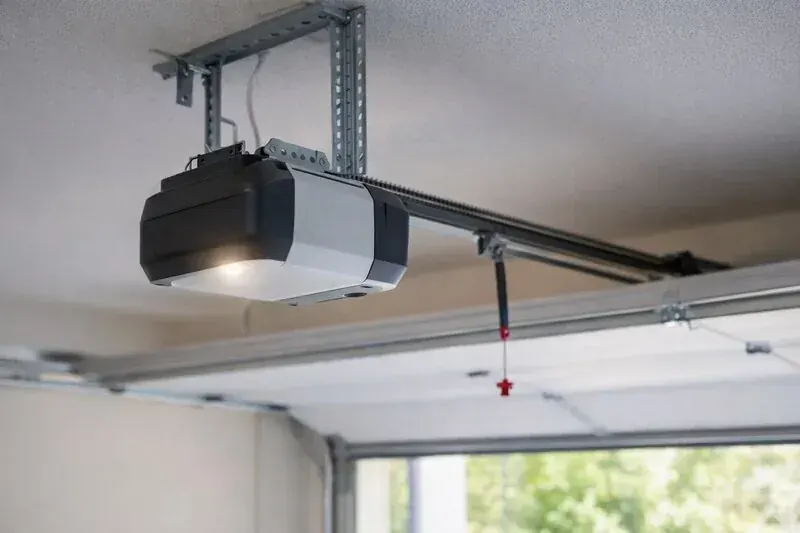
It's 7 AM in Overland Park. You hit the opener button, hear the motor strain for two seconds, and nothing happens — or the door rips open half an inch and stops. Your garage door is frozen to the ground. This is KC's #1 winter call from December through February, driven by the metro's brutal daily temperature swings. Here's exactly how to fix it yourself in under 15 minutes, what you must NOT do (it destroys your opener motor), and when to stop trying and call a pro.
QUICK ANSWER
Disconnect the opener first (pull the red cord). Pour warm — not boiling — water along the bottom seal where it meets the concrete. Wait 60 seconds. Lift by hand. Once free, spray the seal with silicone to prevent tonight's refreeze. If the door still won't move after two rounds of warm water, or if you hear cracking or see a gap in the spring, stop and call (816) 315-5261 — the problem is now the spring or seal, not just ice.
Door won't budge? Spring may be involved.
OnPoint dispatches same-day across all of Kansas City Metro — Overland Park, Lee's Summit, Olathe, Shawnee, Liberty, Independence, Lenexa, Leawood, Prairie Village, Raytown, Blue Springs, and KCMO. Free written estimate before any work.
Why Kansas City Garages Freeze More Than Most Cities
KC's freeze-thaw problem is worse than cities at similar latitudes because of the metro's extreme daily temperature swings. During a typical KC December or January cold snap:
- Afternoon high: 38–45°F — snow and ice on the garage floor melt, water runs under the door seal
- Overnight low: 14–22°F — that water refreezes into a solid bond between rubber and concrete
- Morning: you hit the opener and the door is glued down
This cycle can repeat every 24–48 hours through February. The full winter garage door service page covers what happens when it's not just the seal but springs and lubricant failing too. This guide focuses on the DIY fix for a door frozen at the bottom.
Which KC neighborhoods freeze most often
We see the most freeze calls from homes with concrete slabs that slope slightly toward the door (common in 1960s–1980s tract homes in Overland Park, Shawnee, and Lenexa), north-facing garage doors in Liberty and Gladstone that never get direct sun to melt the re-frozen seal, and older detached garages in Brookside, Waldo, and Raytown with worn rubber seals that have lost their flex and stick hard to cold concrete.
Step-by-Step: How to Open a Frozen Garage Door (15-Minute Method)
Follow this in order. Skipping Step 1 is how people burn out their opener motor.
- Disconnect the opener first. Locate the red emergency-release cord hanging from the trolley rail and pull it firmly toward the motor unit. You'll hear or feel a click — the door is now manually operated. This step is non-negotiable. Running the motor against a frozen door causes drive-gear failure (a free written estimate repair) or burns out the motor entirely.
- Find the ice bond. Crouch and run your fingers along the entire bottom edge of the door where the rubber weather seal meets the concrete. Frozen sections feel rigid and won't flex when pressed. In most KC freezes, the bond runs along 2–4 feet of the center — but sometimes the whole seal is locked down.
- Pour warm water — not boiling. Fill a bucket or pitcher with warm tap water (100–130°F — comfortable to touch). Pour it steadily along the ice-Warrantied sections, starting at the center and working outward. Boiling water is dangerous on cold metal: thermal shock can crack concrete, warp the bottom rail, or seize the rollers in the track. Warm water works just as well and takes about 60 seconds.
- Wait 60 seconds, then chip gently. Use a plastic ice scraper or wooden putty knife (never metal — it scratches and nicks the bottom rail, creating rust entry points on steel doors) to clear any remaining ice slush from the threshold.
- Lift the door by hand with even pressure. Grip both sides at the bottom rail and lift smoothly. Don't yank — if there's still resistance, apply more warm water and wait. Yanking tears the rubber weather seal off the bottom bracket. A replacement seal is quoted in person, free (installed price quoted in person).
- Prop the door open and dry the slab. Once open, use old towels or a squeegee to remove standing water from the concrete threshold. Wet concrete refreezes tonight and you're back to step one tomorrow morning.
- Re-engage the opener. With the door fully closed, pull the trolley cord back toward the motor until you hear the click of re-engagement. Run one open-close cycle with the wall switch to confirm normal operation.
- Apply silicone spray to the entire bottom seal. A thin coat of silicone spray on the rubber weather seal prevents it from bonding to cold concrete tonight. This is the single most effective short-term prevention step. Use silicone or white lithium grease — never WD-40, which evaporates within hours and leaves no protective film.
PRO TIP — The Heat Cable Permanent Fix
For homes with chronic freezing (3+ freeze events per winter), install a low-wattage heat cable — the same type used on pipe freeze protection — along the concrete slab edge just inside the door threshold. A 6-foot section (a free written estimate at any hardware store) keeps the slab a few degrees above 32°F overnight, preventing the ice bond from forming at all. Connect it to a plug-in thermostat that activates below 35°F so it doesn't run all winter. This is a common permanent fix in Liberty, Independence, and Blue Springs homes with north-facing garages.
What NOT to Do — Mistakes That Cause Expensive Damage
⚠️ SAFETY WARNING: Never Force the Opener
The single most expensive mistake KC homeowners make with a frozen door: pressing the opener button repeatedly. Each attempt strains the drive motor against the ice-Warrantied door. The motor's thermal overload triggers, the plastic drive gear strips its teeth, or the trolley carriage cracks. Gear replacement is quoted in person, free. A stripped gear on an opener over 12 years old usually means full opener replacement at a free written estimate. Disconnect first. Always.
⚠️ SAFETY WARNING: Don't Yank on a Resistant Door
If warm water hasn't broken the bond and you force the door upward, one of three things happens: (1) the rubber weather seal tears off the bottom rail — a free written estimate repair; (2) the bottom panel bends or buckles — a free written estimate panel replacement; (3) if a torsion spring was already near failure, the sudden load snaps it. A snapped torsion spring is a loud bang and a door that's now unmovable and dangerous. If two rounds of warm water don't work, call for professional service. See our full "won't open" diagnostic guide for spring identification.
Other things to skip
- Rock salt or ice melt on the threshold. Salt corrodes steel door bottoms, eats aluminum brackets, and degrades rubber seals within 1–2 seasons. Use concrete-safe calcium chloride if you need ice control, then rinse the area when temperatures rise.
- Boiling water. Thermal shock cracks cold concrete slabs (common in Lee's Summit and Blue Springs where slabs are 30–40 years old) and can seize cold rollers in the track.
- Metal pry bars or chisels. These dent the bottom rail and scratch the door panel coating, causing premature rust — especially on wood-core and composite doors common in Prairie Village and Leawood.
- WD-40 on the weather seal. WD-40 is a water displacer, not a lubricant — it evaporates within hours and actually degrades rubber over time. Use silicone spray or white lithium grease only.
PRO TIP — The Overnight Towel Trick
During a hard freeze warning in KC, lay an old bath towel or doormat along the outside threshold before temperatures drop. The fabric breaks the direct contact between the rubber seal and the concrete slab. It's not waterproof, but it dramatically reduces the contact surface that freezes solid. Pull it out in the morning before you open the door. Simple and free.
When the Problem Is More Than Ice — Signs You Need a Pro
Sometimes what looks like a frozen door is actually a different failure that cold weather exposed. Stop the DIY attempt and call (816) 315-5261 if you see or experience any of the following:
Broken torsion spring
Look up at the horizontal spring(s) above the door. If you see a visible gap, a coil that's clearly separated, or a spring in two pieces — stop immediately. KC torsion springs snap most often in the first arctic cold snap of December or January, when sub-20°F temperatures make the spring steel brittle. With a snapped spring, the door's full weight (130–350 lbs depending on door type) is unsupported. Do not lift it manually. See spring replacement service details.
Torn or missing weather seal
If you've already forced the door and the rubber seal is hanging off the bottom rail or missing in sections, it needs professional replacement before the next freeze. A torn seal lets cold air, water, and rodents into the garage and will refreeze in a worse pattern next night. Weather seal replacement service.
Opener motor that keeps running but door doesn't move
If you re-engage the opener after thawing and the motor hums for several seconds without the door moving — the drive gear has likely stripped. This is a confirmed opener-failure scenario, not a freeze issue. See opener repair pricing and options.
Door opens 4 inches and stops
Partial travel followed by reversal in cold weather usually signals a spring under insufficient tension for the current temperature (cold springs lose effective tension), or a force-limit on the opener that's been set too conservatively. Stuck-door diagnosis guide.
KC Winter Garage Door Repair Costs (2026)
All pricing based on actual KC-metro service calls. Fixed written quote before any work begins — no surprise invoices. See the full KC garage door cost guide for a complete breakdown.
Free Estimate — No Charge for Visit
We quote every job in person, free, with no obligation. There is no trip fee and no charge for the diagnostic visit. You get a written estimate before any work starts.
Call (816) 315-5261 for your free estimate.
Payment: cash, check, all major credit cards, debit, Zelle, ACH. No payment until work complete and approved. Questions? Contact service@onpointprodoors.com.
Permanent Prevention: Stop the Freeze Before It Starts
The goal after your first KC freeze event is to never repeat it. These four steps, done every October before freeze season, eliminate 90% of winter freeze issues across the metro.
1. Annual silicone seal application
Every October, spray silicone lubricant along the entire bottom weather seal and both side seals. Silicone prevents rubber from bonding to concrete and concrete from absorbing water that later freezes. Takes 5 minutes and is quoted in person, free. This is the most cost-effective winter garage door step any KC homeowner can take.
2. Garage floor slope assessment
If water consistently pools at your door threshold, the concrete is sloping toward the door rather than away. This is common in homes built before 1985 across Overland Park, Independence, and Blue Springs. A threshold seal that raises the door's contact point by 3/8 inch — available at hardware stores for a free written estimate — channels water away and prevents pooling.
PRO TIP — Insulated Doors Stay Warmer at the Seal
Insulated garage doors maintain a slightly higher temperature at the bottom panel, which means the slab directly under the door stays marginally warmer — enough to delay or prevent overnight refreezing. If your current door is an uninsulated single-layer steel door and you're getting 3+ freezes per winter, upgrading to an insulated door serves double duty: it reduces freeze events and lowers heating costs by a free written estimate/year for attached garages in Leawood, Prairie Village, and Shawnee. See insulated door options and pricing →
3. Spring inspection every fall
KC torsion springs rated for 10,000 cycles last 7–12 years for most families. Springs under-tensioned going into winter are the ones that snap in December. A fall balance check is quoted in person, free and tells you exactly where your springs are in their lifecycle — before a 6 AM snap in January that leaves you blocked in during a work morning. Spring inspection and replacement →
4. Lubricate all moving parts with cold-rated product
Standard lubricants thicken and lose viscosity below 20°F — which is common in KC January. Apply a white lithium grease or silicone spray rated to -20°F on spring coils, roller stems, hinges, and the top of both tracks. Do not lubricate the track interior — only the rollers and hinges. Avoid petroleum-based lubricants on plastic components (chain guides, trolley carriages on belt-drive openers).
Frequently Asked Questions
Why does my Kansas City garage door freeze to the ground every winter?
KC's daily temperature swings — often 40°F in 24 hours — melt snow and ice during the afternoon. That meltwater runs under the rubber weather seal and refreezes overnight, bonding the seal to the concrete. North-facing doors, sloped-toward-door concrete, and worn rubber seals all make it worse. The fix: silicone spray on the seal every October, a threshold seal to redirect water, and keeping the slab dry before temperatures drop below 32°F.
Will running my garage door opener break the ice bond?
No — and attempting it causes expensive damage. The motor strains against the ice-locked door, strips the plastic drive gear, or triggers thermal overload. Disconnect the opener using the red emergency-release cord before doing anything else. Then thaw with warm water.
Can I use rock salt or ice melt products on my garage door threshold?
Avoid rock salt. It corrodes steel door bottoms, eats aluminum bottom brackets, and degrades rubber seals within 1–2 seasons. Concrete-safe calcium chloride in very small amounts is acceptable if rinsed afterward. Best practice: just use warm water and dry the area after thawing.
My garage door opens a few inches then stops in winter — is it frozen?
Possibly, but more often this is a spring under reduced cold-weather tension or an opener force-limit set too conservatively. Check the bottom seal for ice first. If the seal is free but the door still stops, have spring tension and force-limit checked by a technician. See the full KC garage door won't open guide →
Does cold weather weaken my garage door springs?
Yes. Torsion spring steel becomes more brittle below 20°F. KC's first hard cold snap — typically mid-December — is when the most springs snap. The spring has contracted slightly, lubricant has thickened, and the first heavy morning lift is the breaking load. Springs 7+ years old should be inspected every fall before winter to catch units near their cycle limit.
Do you do emergency garage door repair in Kansas City in winter?
Yes — 24/7 emergency service across all of KC metro including Overland Park, Lee's Summit, Olathe, Liberty, Shawnee, Leawood, Prairie Village, Lenexa, Independence, Blue Springs, Raytown, and KCMO (both MO and KS sides). See our 24/7 emergency dispatch page →
How much does it cost to fix a frozen garage door in Kansas City?
If you fix it yourself with warm water — no. If warm water doesn't work and the seal needs replacement: a free written estimate. If the opener drive gear was stripped by forcing the motor against the frozen door: a free written estimate. Spring replacement (if cold snapped it): a free written estimate for both springs. See full pricing in the table above and the KC garage door cost guide →
Door Still Frozen or Spring Snapped?
Same-day service across all of Kansas City Metro — Overland Park, Lee's Summit, Olathe, Shawnee, Liberty, Independence, Lenexa, Leawood, Prairie Village, Raytown, Blue Springs, and KCMO. Free written estimate. No service-call fee. Warrantied in Missouri and Kansas.
Call (816) 315-526124/7 Emergency · service@onpointprodoors.com
Related: KC frozen garage door service → · 12 causes door won't open → · 24/7 emergency dispatch → · full FAQ →