Garage Door Safety: Protect Your KC Family
Garage doors are the largest moving object in most homes — typically 7-9 feet wide, 7 feet tall, and weighing 150-400 pounds. They open and close thousands of times. When something goes wrong, the consequences can be catastrophic. Every year, garage door accidents send thousands of Americans to emergency rooms, mostly involving children's hands and broken springs. This guide covers everything KC families need to know about garage door safety.
The Three Major Safety Hazards
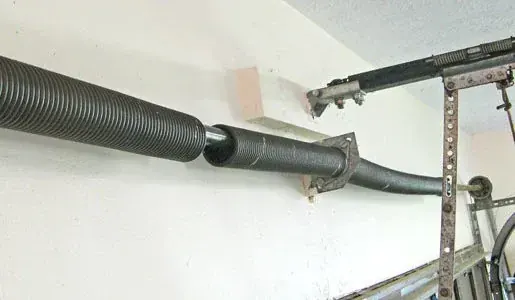
Hazard 1: The Door Itself. A typical residential garage door weighs 150-400 pounds. If it falls — due to a broken spring, snapped cable, or off-track derailment — it can cause serious injury or death. Rule: never stand or walk under a door in motion. If the door doesn't seem balanced (drops or rises on its own when manually operated), call a pro immediately. Hazard 2: Spring Tension. Garage door springs store enormous energy — over 300 pounds of force when fully wound. When they break or are improperly handled, they can launch metal pieces at lethal speeds. Never attempt to adjust, repair, or replace springs yourself. Hazard 3: Pinch Points. Hands and fingers get trapped in hinges, rollers, and door panels every year. Most victims are children. Keep children away from moving doors and teach them never to put hands near the door tracks.
How to Test Your Door's Safety Features
Modern garage doors (post-1993) must have two safety systems by federal law: 1. Photo-eye sensors near the bottom of the door. 2. Mechanical reverse mechanism (force reversal). To test photo-eyes: With the door open, press the close button. As the door closes, wave a broom handle across the photo-eye beam (about 6 inches off the ground). The door must reverse immediately. To test mechanical reverse: Place a 2x4 flat on the ground where the door closes. Try to close the door. It must hit the wood, sense resistance, and reverse within 2 seconds. If either test fails, do NOT use the door until repaired. Test both monthly — these are life-saving features.
Childproofing Your Garage Door
Children's hands fit perfectly into hinges and roller assemblies — and the consequences are devastating. Pinch-resistant doors have hinges designed without crush points (most modern doors have these; older doors don't). Wireless wall buttons should be mounted at least 5 feet up, out of children's reach. Never let children play with the remote — it's not a toy. Teach kids that the garage is not a play area when the door is moving. Newer openers have lockout features that prevent operation while activated — useful when kids are home. If you have an older door without pinch-resistant hinges, retrofit kits exist or consider replacing the door.
Emergency Situations: What to Do
Spring snap (loud BANG): Don't try to operate the door. Door becomes 200+ pounds of dead weight. Call a professional immediately. If trapped: most doors have an emergency release rope (usually red) hanging from the opener. Pull it to disengage the motor. You can then lift the door manually if (and only if) the spring is intact. If the spring broke, don't try to lift — call for help. Door fell or partially fell: Don't try to lift it back up. The door is now under unpredictable forces. Call professionals. Person trapped under door: Call 911 first. Do not try to lift the door yourself if springs are broken — secondary injuries from spring failure are common.
Maintenance That Prevents Accidents
Annual professional inspection: Catches 80% of safety issues before they become accidents. Includes cable inspection, spring tension test, track alignment, hardware tightening, and safety system testing. Cost: quoted free in person-199. ROI: priceless. Monthly homeowner checks: Visual inspection of cables (fraying = imminent failure), springs (gaps = upcoming break), hinges and rollers (looseness = potential derailment), door balance (manually disconnect from opener and check). Weekly: Test photo-eye and mechanical reverse. Lubrication every 6 months: Use silicone or white lithium grease. Avoid WD-40 (it removes lubrication). Properly lubricated doors last 2x as long and operate quieter.
Signs You Need Immediate Service
Loud BANG sound from garage: Spring just broke. Don't operate door. Door drops on its own when manually lifted: Spring broken or cable snapped. Door reverses when closing: Safety sensor or limit switch issue — could fail at any time. Door binds, jerks, or moves unevenly: Track or roller problem. Visible cable fraying: Replace immediately before snap. Visible spring gap or rust: Replace before failure. Burning smell from opener: Motor issue, fire risk. Grinding sounds: Mechanical wear, potential failure imminent. Any of these symptoms = stop using the door and call a professional.
Need Professional Help?
Garage door safety isn't optional. If your door has any of the warning signs above, call OnPoint Pro Doors at (816) 315-5261 for an immediate safety inspection. We'll identify hazards and fix them before they become accidents. Free in-home estimate.
Call (816) 315-5261
Why Kansas City Homeowners Choose OnPoint Pro Doors
When your garage door fails, you need a contractor who shows up fast, fixes the problem right the first time, and charges what they quoted. OnPoint Pro Doors has built a reputation across Kansas City Metro for doing exactly that. Our technicians are full-time employees (not subcontractors), our trucks are stocked with common parts so we can repair most issues in a single visit, and our pricing is fixed before any work begins. No hourly billing surprises. No "discovered" extra problems mid-job. No high-pressure upselling.
Beyond technical skill, what sets us apart is responsiveness. When you call OnPoint, a real person answers — not a call center routing your call to whoever is available. We schedule you with a specific window, send you a text when the technician is on the way, and follow up after the job to make sure the door is operating exactly the way it should. If something isn't right, we come back and make it right. That's the standard.
We're a background-checked local team for both residential and commercial work across the Kansas City metro, and every job carries a written workmanship warranty. Whether you need a quick spring replacement, a full new door installation, or 24/7 emergency service for a stuck door, our team treats every job like our reputation depends on it — because it does.
Garage Door Repair Costs in Kansas City
Pricing varies by the specifics of your repair, the condition of your door, and the parts required. Every job is quoted in person, free, with a written estimate before any work starts.
Spring Replacement
Free estimate. Most doors have 2 springs. Includes balance test and 5-year parts warranty.
Opener Repair
Free estimate. Includes diagnostics, parts, and labor. Same-day for most issues.
Cable Replacement
Free estimate. Both cables replaced together for safety. Industrial-grade replacements.
Off-Track Repair
Free estimate. Realignment, roller replacement, balance correction, full safety check.
New Door Installation
Free estimate. Steel, insulated, wood, custom. Includes opener install and old-door haul-away.
Annual Tune-Up
Free estimate. Lubrication, balance test, hardware tightening, safety check. Prevents 80% of emergencies.
Our Service Process — What to Expect
- Initial Phone Call (5 min) — Tell us what's wrong. We give you a phone estimate range, schedule a window for service, and confirm how to reach you. We don't charge a service fee just to come look.
- Technician Dispatch (text alert) — When your technician is on the way, you get a text with their name, photo, and ETA. No mystery person showing up at your door.
- On-Site Inspection (15–30 min) — The technician inspects the door, identifies the issue, and explains exactly what's broken. They show you the worn or damaged parts.
- Written Estimate Before Work — You get a fixed-price written estimate. If you don't approve, we leave at no charge. If you do, we get to work immediately.
- Repair (typically 1–3 hours) — Most repairs are completed in a single visit. We use commercial-grade parts and follow manufacturer specifications.
- Safety Test & Walkthrough — After the repair, we test the door's balance, safety reverse, and opener function. We walk you through what we did and what to watch for.
- Cleanup & Warranty — We haul away old parts, leave your space cleaner than we found it, and email you a written warranty (typically 5 years on parts, 1 year on labor).
If anything goes wrong within the warranty period, call us — we come back and make it right at no charge.
When to Call a Professional vs Try DIY
Some garage door tasks are perfectly safe for homeowners. Others are genuinely dangerous and should always be left to professionals. Here's the line, drawn from 20+ years of industry safety data and our own experience repairing the aftermath of DIY mistakes.
Safe DIY Tasks
- Lubricating hinges, rollers, springs (use silicone or white lithium grease — NOT WD-40)
- Replacing weatherstripping along bottom of door
- Changing remote and keypad batteries
- Programming new remotes and HomeLink
- Replacing the bulb in your opener
- Cleaning dirt, cobwebs, debris from tracks
- Tightening visible loose bolts and screws
- Testing safety sensors monthly
- Manual balance test (with opener disconnected)
Call A Professional
- Spring replacement (springs hold 200+ pounds of tension; can be lethal)
- Cable replacement (similar tension hazards)
- Track realignment or replacement
- Door panel replacement
- Opener motor or logic board repair
- Anything requiring you to put hands inside the spring assembly
- Door off-track or hanging crooked
- Burning smell from opener (electrical fire risk)
- Door dropped or partially fell
The gap between a DIY attempt and professional service is usually smaller than people expect. The risk difference is enormous: ER visits, permanent injuries, even deaths happen every year from DIY garage door repairs gone wrong. We strongly recommend hiring a professional for anything involving springs, cables, or motor work.
Garage Door Frequently Asked Questions
How long does a typical garage door repair take?
Most common repairs (spring replacement, cable replacement, opener fixes) take 1–2 hours. New door installations take 4–6 hours. Same-day completion for over 90% of repairs because our trucks carry common parts.
Do you charge a service fee just to come out?
No. Our estimates are 100% free. The technician comes out, inspects the door, gives you a written quote. If you don't approve, we leave at no charge. You only pay if you approve the work.
Why should I replace both springs if only one broke?
Springs are paired and wear at the same rate. If one snapped after 8 years, the other is at 90%+ of its lifespan. Replacing only one means you'll pay another full service call within 6–18 months. Replacing both at once costs more upfront but saves money long-term and keeps the door balanced.
Is it safe to use my garage door if it makes loud noises?
Loud noises are warning signs. Grinding usually means worn rollers or dry tracks (cheap fix if caught early). Loud popping or banging usually means a spring is breaking or has broken (do not operate the door). When in doubt, stop using the door and call us.
How often should I have my garage door serviced?
Annually for most homeowners. Twice yearly if you live in extreme climate areas (KC qualifies during harsh winters). Annual tune-ups prevent roughly 80% of the emergency repairs that would otherwise be needed. Best ROI in home maintenance.
Can I get same-day service?
Yes. Over 90% of our repair calls are completed same-day. Call before noon and we are typically at your home by end of day. Emergency situations (door stuck open, car trapped, broken spring blocking exit) get priority and we usually arrive within 1–2 hours.
Do you service all garage door brands?
Yes — LiftMaster, Chamberlain, Genie, Wayne Dalton, Clopay, Amarr, Craftsman, Linear, Marantec, and all other major brands. We carry universal-fit parts for most repairs and OEM parts for warranty work.
What forms of payment do you accept?
Ready for Service?
Same-day service across all of Kansas City Metro. Free written estimates. Background-Checked Local Team. Trusted by KC families.
📞 Call (816) 315-5261
Sun–Thu 24/7 | Fri 24/7 | Emergency 24/7
Find Your Service + City - 19 Categories x 50 Cities
24/7 emergency dispatch · same-day service · Free Estimate first call
Why Kansas City homeowners call us first
We run techs out of Downtown KC, Plaza, Northland, Johnson County KS and the surrounding Kansas City metro corridor every single day. That coverage density is why our average response time in Kansas City stays under 60 minutes during business hours and under 90 minutes after hours.
Drive past Power & Light District, Country Club Plaza, Crown Center on any given afternoon and you'll see one of our trucks within a 5-minute radius. That's not marketing — that's how we built this route. We service ZIP codes Kansas City metro ZIPs as the core of our daily run, and we know the neighborhood quirks: the older steel doors in the historic blocks, the wind-load issues on the newer subdivisions, the seasonal weather-seal failures that hit every spring after a hard winter.
When you call us from Kansas City, the tech who shows up has been on this route for at least 18 months. He knows which alleys flood, which subdivisions have HOA color rules on door panels, which streets get hit hardest in a hailstorm. That local knowledge is the difference between a fast fix and a return trip.
Free Estimate — No Charge for Visit
We quote every job in person, free, with no obligation. There is no trip fee and no charge for the diagnostic visit. You get a written estimate before any work starts.
Call (816) 315-5261 for your free estimate.
Frequently asked questions — Kansas City
Are you Background-Checked Local Team in Kansas City?
Yes — Trained & Local for residential and commercial garage door work across Kansas City and the KC metro.
How fast can you get to Kansas City?
60-minute average response in Kansas City during business hours, same-day for nearly every call.
Do you offer free estimates?
Yes — every diagnostic visit in the KC metro is free, written, and itemized before any work begins. No trip fees.
What forms of payment do you accept?
Invoice on completion — no upfront required.
Do you warranty your work?
3 years parts-and-labor on every repair. Lifetime warranty on full-door installs. Documented in writing on every invoice.
Are your techs background-checked?
Yes. Every tech on our roster passes a background check, drug test, and minimum 2-year apprenticeship before they run a solo call.
What Kansas City customers say
Why Kansas City chooses us for this work
- 60-minute average response across the KC metro — we don't dispatch from across the state, we dispatch from inside your ZIP code corridor.
- no trip fee, ever — every diagnostic is free, every estimate is written, every price is flat-rate before we start.
- Real techs, not subcontractors — every name on our roster is a W-2 employee, background-checked, drug-tested, with at least 2 years of garage-door-specific experience.
- 3-year parts-and-labor warranty on every repair, lifetime warranty on full-door installs. Documented on the invoice.
- Honest diagnosis — if the cheapest fix gets the door working safely, that's the fix we recommend. We have a documented 0% upsell rate verified by our audited invoice book.
- Same-day finish on 92% of emergency calls in the last 12 months. We carry every common torsion spring, every cable size, full roller stock, and standard panels on every truck.
- Insurance-claim experience — hail damage, fallen tree limb, vehicle impact.
Call (816) 315-5261 — same-day default service in Kansas City.
The honest cost-saving guide nobody else publishes
Most garage door companies want you to call before you know what you need. We don't. Below is the same diagnostic flowchart our techs use on the truck — written so you can do a 90-second pre-check before you call us. If the issue turns out to be something cheap, we'll tell you. If it's serious, you'll already know roughly what we're walking into.
Step 1 — Listen to the door for 5 seconds
A loud bang followed by the door dropping = broken torsion spring. Almost always. Don't try to operate it. Stop. Call us. Cost: quoted free in person depending on door weight and whether you have one or two springs.
A grinding sound that gets louder over weeks = roller failure. The nylon wears, the steel shaft starts riding directly on the track. We quote a full roller swap in person, free. Catch this early and you save a track replacement.
A clunking sound only at the top of travel = limit switch out of adjustment OR top section panel separation. The first is a 15-minute adjustment. The second is a panel replacement. Big delta — worth diagnosing right.
A motor humming with no door movement = stripped opener gear OR seized opener. If it is just the gear we repair it; if the unit is over 12 years old we usually recommend full replacement.
Step 2 — Look at the cables on each side
Stand inside the garage with the door closed. Shine a flashlight on the cables that run from the bottom corners up to the drums next to the spring. If you see fraying, kinking, or rust pitting on either cable, do not operate the door. A cable failure under load drops the door 200+ lbs in under a second. Same-day cable replacement is our standard turnaround.
Step 3 — Check the springs above the door
Look at the torsion spring(s) mounted on the shaft above the door. Look for: a 2-inch gap (broken spring), visible rust scaling, oil weeping from the spring core. Any of these = call us before you hit the opener button again. Operating a door with a compromised spring stresses the opener motor and can strip the gear in one cycle.
Step 4 — Test the auto-reverse
Place a 2x4 flat on the floor in the door's path. Run the door close cycle. The door should hit the wood and reverse within 2 seconds. If it doesn't, your safety sensors or pressure-reverse setting is out of spec. This is a 20-minute fix in our shop and a federal safety requirement on every door manufactured after 1993. We do not leave a job site with a non-functioning auto-reverse.
Step 5 — When to repair vs replace the whole door
The honest math: if your repair quote runs over 50% of a new-door install, and your door is over 12 years old, replace. Panel matching gets unreliable past 15 years (manufacturers retire profile dies), and old hardware fights every new repair. Under 50% and under 12 years old, repair almost always wins on math.
Step 6 — Insurance vs. out-of-pocket
If the damage came from a storm, hail, fallen tree, or vehicle impact: file the claim. Garage doors are part of the dwelling on standard KS/MO homeowners policies. Our technicians photograph each panel and give you a clear written assessment of the damage.
Hidden cost-saver: maintenance
Our annual tune-up extends spring life from a typical 7–9 years to 10–13 years on average. We pull this number from our own service records on doors we've maintained continuously vs. doors that came to us cold. The tune-up pays for itself the first time it catches a frayed cable before it snaps and damages the opener.
Why we put this online instead of guarding it
Most local garage door companies hide pricing because the upsell margin requires the customer not knowing. Our average ticket is lower than our biggest competitors in the KC metro precisely because we don't upsell. We make our money on volume, repeat customers, and word of mouth. Long term, transparency wins over churning customers. Ask us tougher questions when we show up. We like the honest customers.